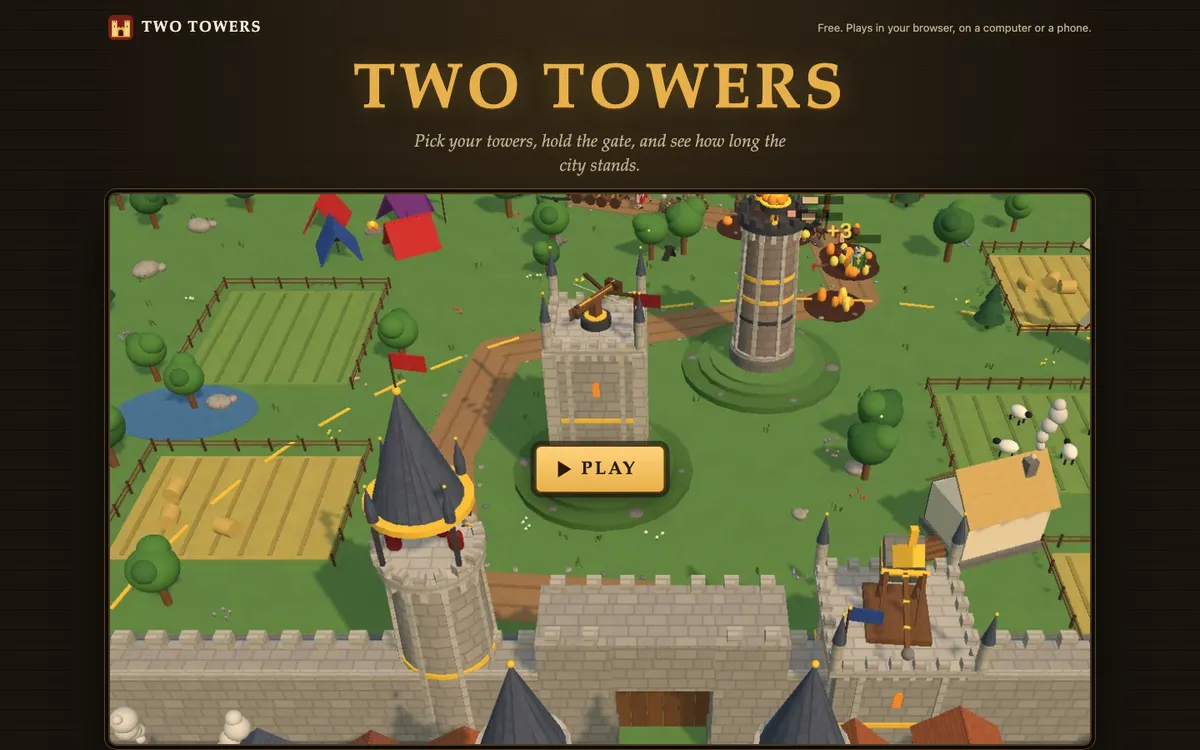
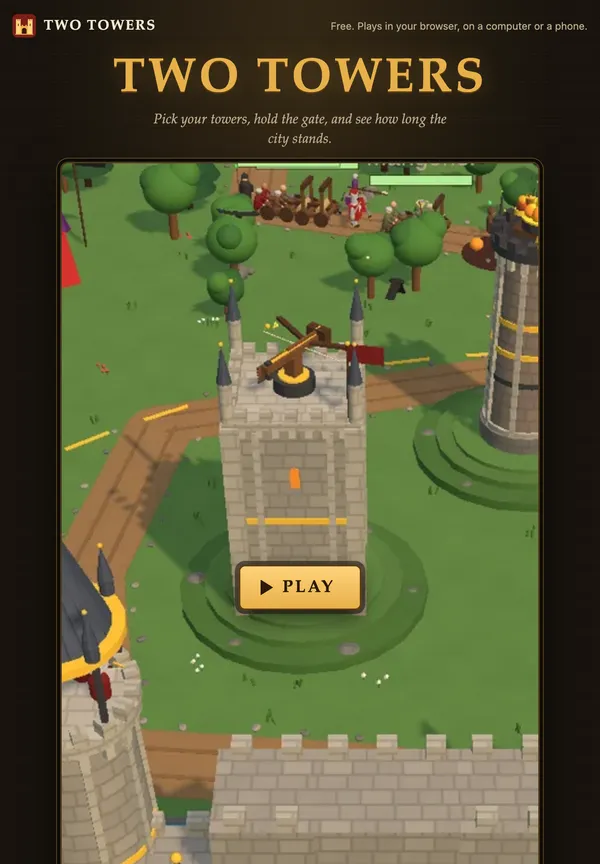
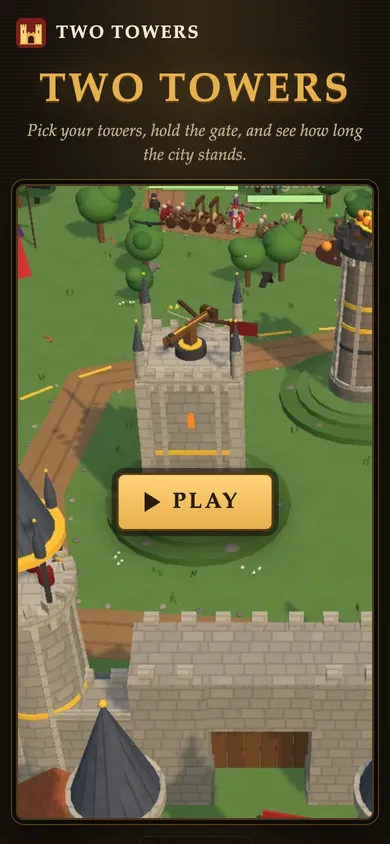
Anyone who has played a few castle defense games has probably wondered: why do tower defense games send waves of enemies, instead of one long, even stream? The short answer is that waves turn a defense into a chain of decisions. Each wave checks your last choices and gives you a reason to make new ones. The same questions about placement and gold apply in a browser castle defense game where you pick a pair of towers, add two more with gold, and hold the city gate against knights, monks, kings and rams, stage after stage.
Why Do Tower Defense Games Send Waves of Enemies?
The tower defense genre is built on a simple goal: stop attackers from reaching a point you protect by placing defensive structures along their route. In many games, enemies arrive in groups, and the game counts how many get through. That grouping is the wave. The idea is older than the genre: the 1978 arcade game Space Invaders already had the player defend the bottom of the screen against waves of incoming enemies.
Waves do four jobs at once:
- They create a rhythm. Pressure builds while a wave is on the field, then drops when it ends. You get time to think between the hard parts.
- They give clear feedback. A wave is a single, readable event. If three enemies slip past, you know the layout failed against that group, not against some blur of attackers.
- They drive the economy. Many games pay you for clearing enemies, so each wave is also a payday.
- They let difficulty climb in steps. Designers can make each wave a little harder than the last, which is easier to plan around than a slow, invisible ramp.
A steady stream would blur all four. You would never get a quiet moment, never know exactly which choice failed, and never feel the jump from one level of threat to the next.
How the Pause Between Waves Gives Time to Place Towers
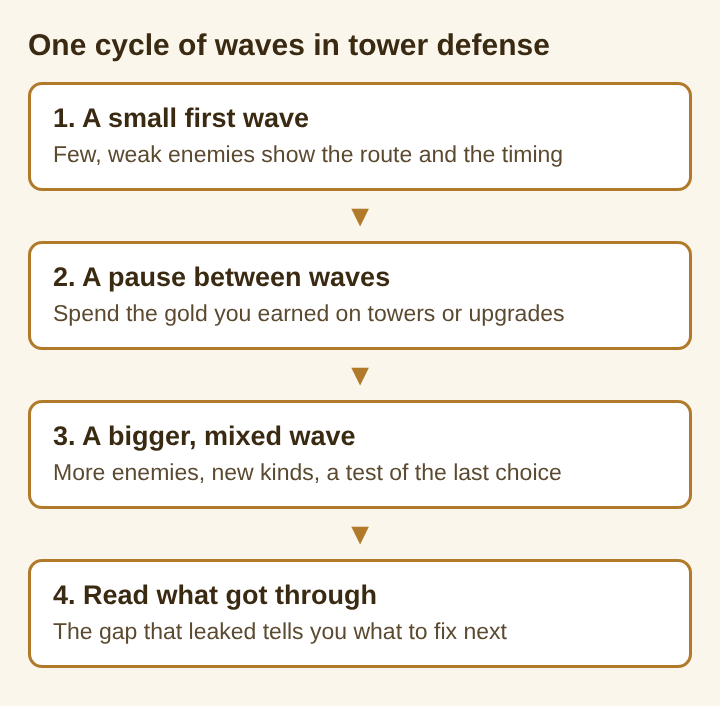
In games built on waves, the gap between them is where most of the real strategy happens. While enemies are on the field, you mostly watch. During the pause, you plan.
Here is a common situation. A wave of foot soldiers comes down the road. Your first tower sits near the entrance, and it fires at every enemy that passes. Even so, a few soldiers reach the gate, because they walk out of range before the tower can finish them. The pause gives you a chance to act on that. You can move your next tower closer to a chokepoint, where the road narrows and enemies bunch together, or you can place it so two towers cover the same stretch of road.
Reading a wave this way is a habit worth building. Ask three questions after each one:
- Where did the leaks happen?
- Which enemies leaked: the fast ones, the tough ones, or the ones that came in a crowd?
- Which tower spent the most time with nothing in range?
The answers point straight at your next placement. For a fuller look at reading ground and range, see where to place towers in a tower defense game.
How Gold Earned Each Wave Shapes Spending Choices
In many tower defense games, gold comes in as enemies fall and as waves end; a currency earned by defeating attackers is one of the genre's usual features. That ties money to performance. A clean wave pays well. A messy one may leave you short and behind.
This creates the core spending question: spend now or save? Say you finish a wave with enough gold for one small tower, and the next wave is likely to be harder. Spending right away adds damage for the coming fight. Saving might let you afford something stronger one wave later, but only if your current setup survives the gap.
A useful rule of thumb is to spend when a wave showed a clear weakness, and save when it did not. If nothing leaked and your towers had spare time, you have room to bank gold for a bigger purchase. If enemies reached the gate, fix that first. A saved coin does nothing while the gate is taking hits.
Waves also make spending feel fair. Because income arrives in steps, you can count what you will have before the next group arrives and plan around that number.
How Rising Wave Difficulty Puts Pressure on the Gate
Each wave usually asks more of you than the one before. Enemies may be tougher, more numerous, faster, or arrive closer together. The point is to keep the challenge just ahead of your defense, so you are never fully comfortable.
This matches a well known idea from psychology called flow): people tend to stay focused and engaged when a task's challenge sits close to their skill. Too easy feels dull. Too hard feels hopeless. Stepped waves let a game stay in that middle band, raising the bar each time you clear it.
For a defender, rising difficulty means the gate is always under growing pressure. A layout that held wave three with ease may barely hold wave six. That is why early slack matters. If your early waves end with towers sitting idle, use that comfort to build for the harder groups to come, not to relax.
It also explains why losing late is so common. Many players build just enough to clear each wave, then meet a sudden jump they never prepared for. Planning one or two waves ahead is the habit that breaks this pattern.
How Mixed Enemy Types in a Wave Change Tower Placement
A wave is rarely made of one enemy type. Designers mix fast units, armored units, and units that arrive in packs, because each type punishes a different mistake.
- Packs of weak enemies overwhelm towers that hit one target at a time. Area attacks answer them, and splash damage is built for exactly this.
- Tough, slow enemies soak up damage. They reward towers with steady, heavy hits and long coverage along the road.
- Fast enemies leave range quickly, so they reward towers placed where the path bends back or narrows.
- Siege units such as rams go straight for the gate. The history of how battering rams were stopped shows why defenders focus fire on them before they arrive.
Mixed waves force you to balance. A defense built only for crowds can fold against one heavily armored enemy. A defense built only for single targets can drown in a swarm. Each mixed wave shows you which side you leaned too far toward.
Holding the Gate Stage After Stage in Two Towers
The game is a one player strategy and tower defense game with the title line "defend the castle gate, stage after stage." You start by picking a pair of towers, then add two more with gold, and hold the city gate against knights, monks, kings and rams. The site does not describe how enemies arrive within a stage, and it does not list tower powers, costs, or enemy strengths, so how each attacker behaves is something you find out on the field.
Progress is counted in stages held. Players who sign in as a defender put their name on kingdom boards, which rank defenders by stages held and enemies slain, with a board for each kingdom, such as Greenvale, Darkwood and Frostholm. A player's best stage is kept on their device either way. That ranking makes each stage a clear marker: how far the gate held, and how many attackers fell before it.
It runs in a web browser on a computer or a phone with WebGL 2, which a current Chrome, Edge, Firefox or Safari offers, and it is also an Android app. It is made for players aged 13 and over.
Frequently asked questions
How many waves does a tower defense level usually have?
It varies a lot by game. Some levels end after a handful of waves, while endless modes keep sending waves until the defense breaks.
Should gold be spent right away or saved between waves?
Spend right away when the last wave showed a clear leak, because an unfixed gap costs more than any saving. Save when your defense held easily, so you can afford a stronger purchase before difficulty jumps.
What makes a boss wave different from a normal wave?
A boss wave centers on one very tough enemy, a boss) in the usual video game sense. It checks whether your towers can deal heavy damage to a single target, not just thin out a crowd.
Why do tower defense games send waves of enemies instead of a steady stream?
Waves give you pauses to plan, clear feedback on what failed, income in predictable steps, and difficulty that rises in readable jumps. A steady stream would remove all of those decision points.
Why Waves of Enemies Define Tower Defense Strategy
Waves are what make tower defense a strategy game rather than a reflex game. Each one sets up a loop: watch the attack, read the leaks, spend your gold, adjust your towers, and face a harder group. The pause gives you time. The gold gives you options. The rising difficulty keeps the gate under pressure, and the mix of enemy types stops any single answer from working forever.
Once you see waves as a series of small checks, the game changes. You stop asking how to survive the current group and start asking what the next two groups will demand. Players who read each wave closely, fix one weakness at a time, and keep a little slack for the jumps to come are the ones whose gates hold longest.
Two Towers
Defend the castle gate, stage after stage. Visit twotowers.vlvd.net