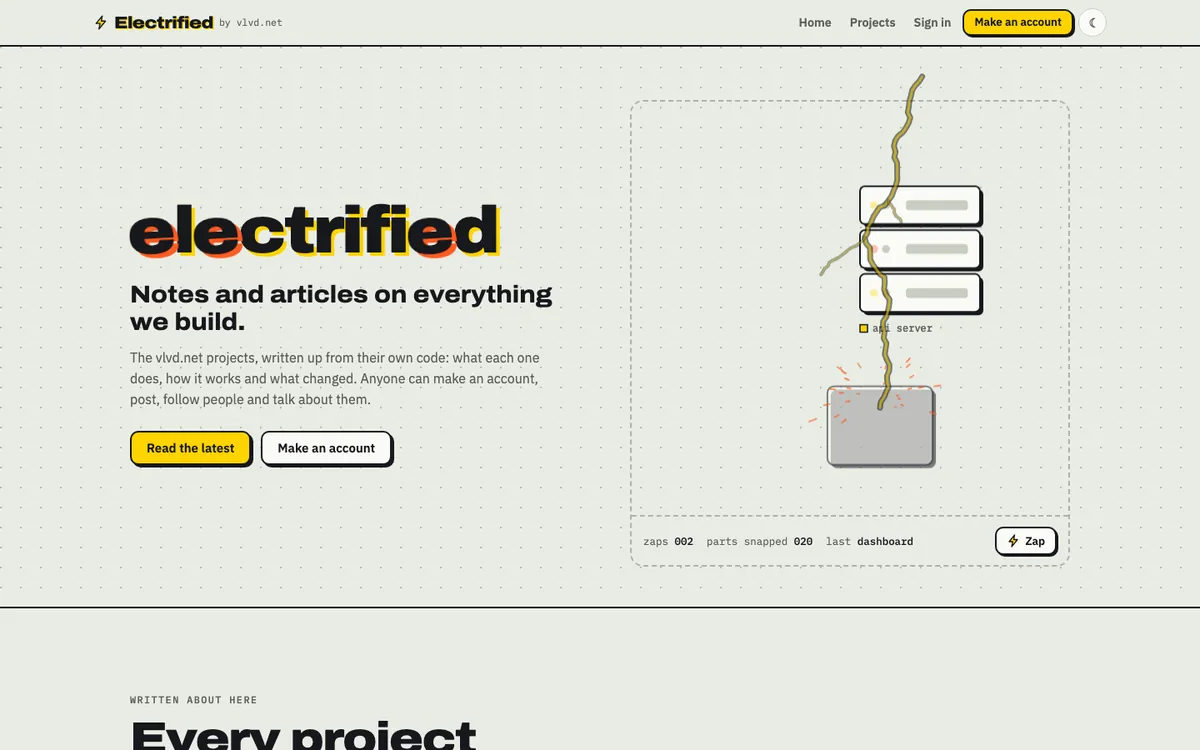
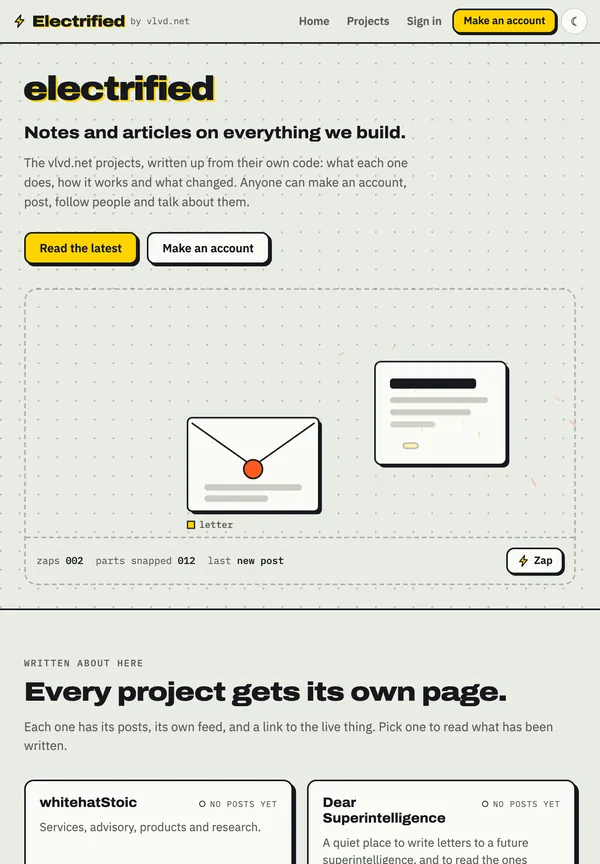
The simplest way to decide how to choose what to write about on a blog is to stop hunting for subjects and start collecting questions. A subject such as "study skills" gives you nothing to write on Monday morning. A question such as "How should a student spend the last three days before an exam?" gives you a first sentence, a reader, and a clear finish line. You can see the answer-first approach at work on a public writing site where anyone can post notes and articles. Most of what it holds is practical guides on AI safety, security, study skills, history and games, and its guides open with the answer, then work through an example.
How to choose what to write about on a blog: start from a reader's question
A question tells you three things a subject cannot. It tells you who is reading: someone who has this problem today. It tells you what they need: an answer, not a survey of the field. And it tells you when the post is done: when the question is answered and the reader can act.
Paul Graham describes the useful version of this in How to Write Usefully. His point is that useful writing tells people something true and important that they did not already know, and says it as plainly as possible. In The Age of the Essay he argues that a real essay begins with a question, not with a position to defend. Both ideas point the same way: the question comes first, and the post exists to answer it.
Here is a worked example. Say you know a lot about studying. A subject list might read "memory, note taking, exams, focus." Turn each one into the question a real student asks:
- "How do I remember a list of dates for a history exam?"
- "Should I rewrite my notes or just reread them?"
- "What should I do the night before an exam?"
- "How do I study when my phone keeps pulling me away?"
Each line is now a post. Each one has a reader who wants a specific answer, and you know what that answer has to cover.
Where real questions come from: searches, comments and daily work
Invented questions sound right but often match nobody. Real questions come from three places.
Searches. When you type the start of a question into a search box, the suggestions show phrasing that real people use. The aim of keyword research is to find terms that are highly relevant yet not obvious, so write down the exact words. "How to remember dates for history" is closer to a reader than "memorization techniques."
Comments and replies. Every comment that says "but what about..." is a new question. If three readers ask the same follow-up under one post, that follow-up deserves its own post.
Your daily work. The questions you answer for friends, coworkers or classmates are the most reliable source. If someone asked you this week how to spot a fake login email, other people are asking it too. Keep a plain note on your phone and add each question the moment you hear it, in the asker's own words.
After a month, that note becomes your list of post ideas. The questions that keep coming back are the ones to write first.
Which questions a practical guide can answer in its first paragraph
Not every question makes a good post. A quick filter: can you give the core answer in the first paragraph, in two or three sentences? Journalists call this structure the inverted pyramid): the most important information goes first, and detail follows in order of importance.
Take "What should I do the night before an exam?" The answer fits in a paragraph: go over your summary notes once, do a short set of practice questions, pack what you need for the morning, and sleep. The rest of the post explains each step with an example. That question passes.
Now take "How does memory work?" No honest answer fits in a paragraph. It is a field, not a question. Narrow it until it passes: "Why do I forget what I read last week?" can open with a direct answer and then show a fix.
Questions that fail the filter tend to share a few traits:
- They are really a whole field ("How does security work?").
- The answer depends on facts you do not have ("Which exam board is easiest?").
- They ask for an opinion with nothing to act on ("Is history important?").
If you can shape the answer first, the rest of the post becomes easy to scan. The habit is set out in more detail in how to write an article people can skim, answer first, and the same thinking applies to section titles in how to write headings that answer a question.
Writing in public as a way to find the next blog subject
Once you publish, the source of questions changes. You no longer guess what readers want. They tell you.
A post on "the night before an exam" will draw questions you did not plan for. One reader asks what to do if the exam is in the afternoon. Another asks whether to study with friends that evening. A third points out that your advice on sleep skipped students who work night shifts. Each comment is a new, real question with a real person behind it.
Writing in public also exposes mistakes faster. If a step is wrong, someone will say so. The correction itself often becomes a post: "What to do when you have only one night to study," written because a reader showed that the first post assumed too much time.
The practical habit: after each post goes live, read every comment and copy any new question into your idea list. Your list then grows from the people who actually read you.
What an answer-first guide looks like in practice
Each guide on the site opens with the answer and then works through an example.
Each guide ends with three to five follow-up questions, each one answered. Every guide is also filed under its subjects, such as AI alignment, problem solving, study tips, browser games and castles, so the next guide a reader needs is a click away. On your own blog, a question that leads to further questions gives you both a closing FAQ and a path to the next post.
The public side matters too. Anyone can make an account, get their own page, and write short notes and longer articles. Each post shows who wrote it and links to that writer's page. Readers can follow writers, like posts and comment, and if something in a post is wrong, readers say so in its comments. Every claim a guide makes about a product is matched to a source page before the guide is saved.
For your own blog, that last habit doubles as a filter: a question is a good pick when its answer can be backed by a page someone else can open. Pick questions you can answer first, back with sources, and follow with the next questions a reader will have. The source habit is covered in how to fact-check your own blog post before it goes out.
Checks before committing to a blog subject
Before you spend an afternoon on a post, run the question through these checks:
- Is it a real question? Can you point to a person, a comment or a search that asked it in roughly these words?
- Can you answer it in the first paragraph? Write those two or three sentences now. If you cannot, narrow the question.
- Do you know the answer, or can you source it? If a claim needs a source, find the page before you write.
- Is there an example you can work through? A step a reader takes, a situation they are in, a mistake they make. Without one, the post stays abstract.
- What are the next three questions? If you can list them, you have a closing FAQ and your next posts. How to write an FAQ section for an article shows how to answer them briefly.
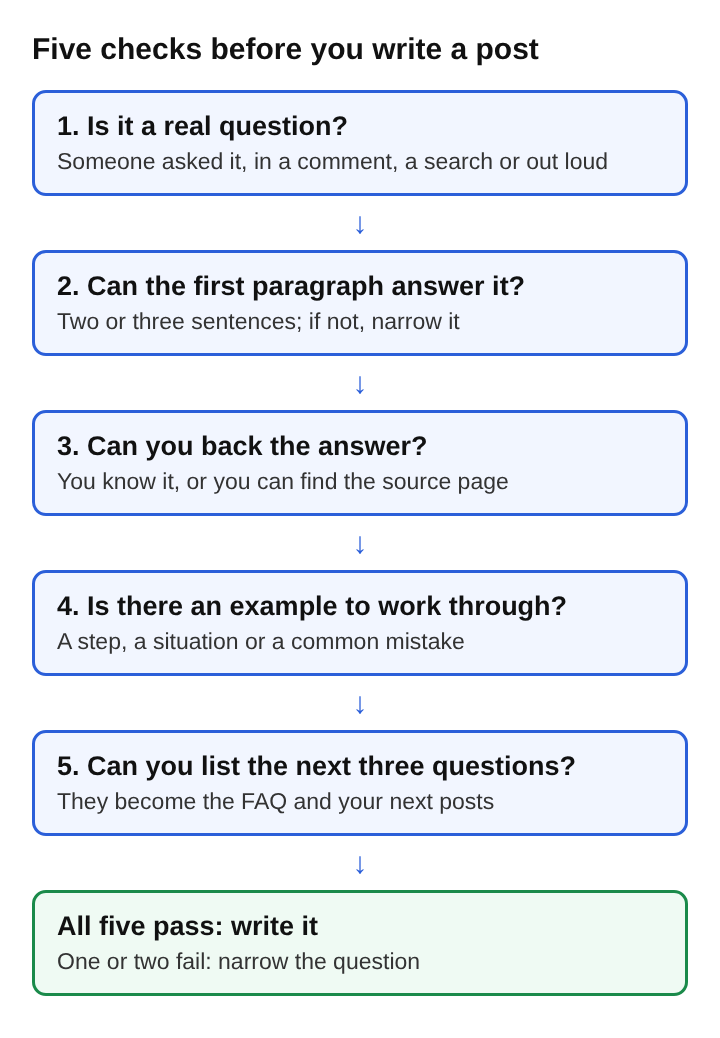
A question that passes all five is ready. A question that fails one or two usually needs narrowing, not dropping.
Frequently asked questions
How many post ideas should a new blog start with?
Start with a list of ten to twenty real questions and write the five that come up most often. The list will grow from reader comments once those posts are live.
Should a blog stay with one subject or cover several areas?
Either works if each post answers one clear question. If you cover several areas, file each post under its subject so readers can find the next answer they need.
What if a question already has many answers online?
Write it anyway if you can answer it more directly or with a clearer example. A post that gives the answer in its first paragraph and backs it with sources is still useful, even on a common question.
How do you choose what to write about on a blog when ideas run out?
Go back to the comments on your old posts and to the questions people ask you at work or school. Each unanswered follow-up is a new post.
Choosing what to write about on a blog, one answered question at a time
The choice gets easier once you stop asking "What should I write about?" and start asking "What did someone ask me this week?" Keep a running note of real questions in the asker's own words. Pick the ones you can answer in a paragraph, back with a source, and illustrate with an example. Publish, read the replies, and add every new question to the note. Over time, your blog becomes a set of answers to questions people actually had, and the next post is always waiting in the last one's comments.
Electrified